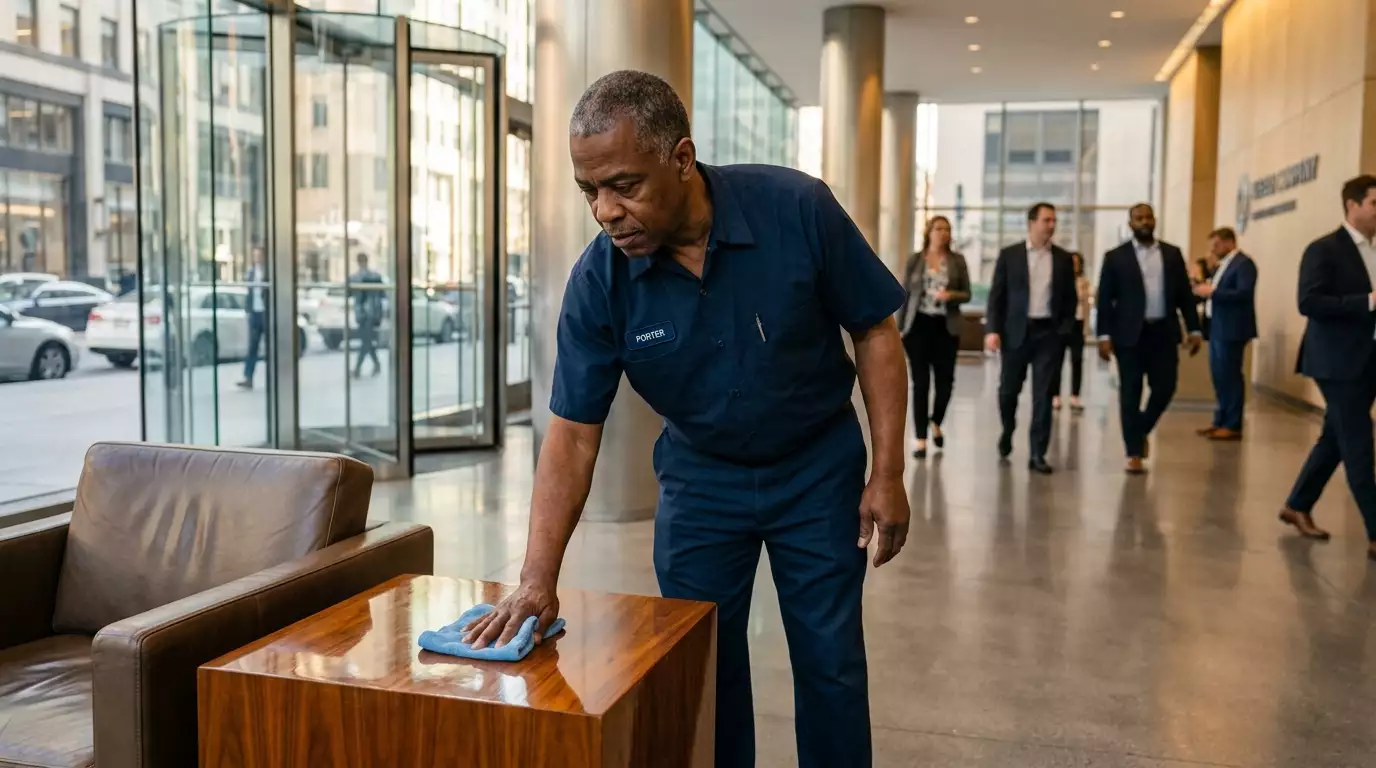
Day Porter Services: Your Building, All Day Long
A dedicated on-site professional who keeps your facility presentation-ready, your restrooms stocked, and your tenants satisfied from open to close.
Your Building Looks Great at 7 AM. By Noon, It’s a Different Story.
The Mid-Day Decline Problem
Your nightly crew does their job well. You walk in every morning to a clean lobby, fresh restrooms, stocked dispensers, and cleared common areas.
Then business starts.
The lobby mat takes 400 footsteps by 9 AM. Someone spills coffee in the breakroom at 9:45 and leaves a paper towel on top of it. The second-floor men’s restroom runs out of soap before the 10 AM meeting rush. A prospective tenant touring the building with your property manager watches the same crumpled cup sit next to the elevator bank for twenty minutes.
By noon, the evidence of your nightly crew is gone. The building looks neglected – not because your cleaning program failed, but because nobody was there to maintain it through eight hours of real-world use.
This is the problem a day porter solves. And it’s the reason building managers in Schaumburg, Hoffman Estates, Rolling Meadows, and Northbrook who implement day porter service rarely remove it.
What a Day Porter Is (And What They’re Not)
A day porter is not a cleaning crew. They’re a facility presence.
The distinction matters. A cleaning crew executes a task list at a defined time. A day porter responds to your building in real time – what’s happening right now, what’s about to become a problem, what a tenant just walked past and silently judged.
They’re the person who:
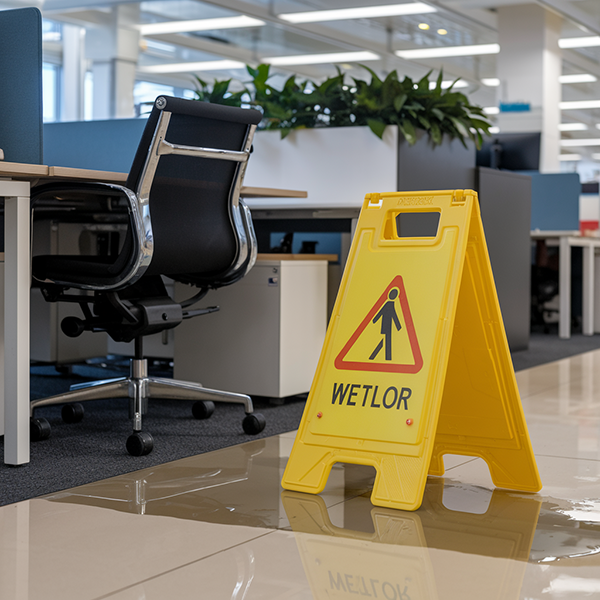
- Gets the wet floor sign out before someone slips on the tracked rain from 8:15 AM
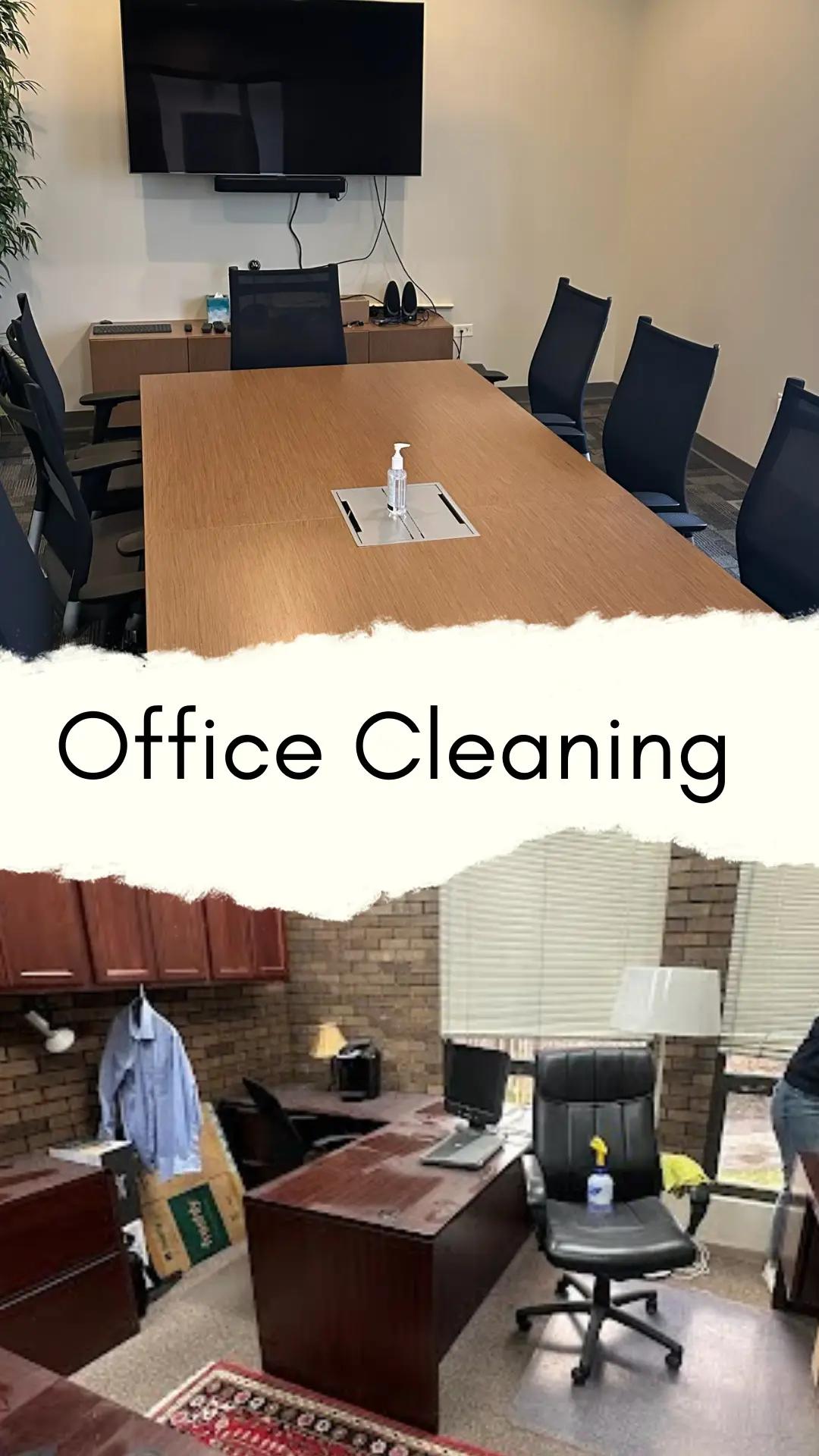
- Resets the conference room between your tenant’s back-to-back client meetings before anyone has to ask
- Polices the lobby glass doors twice mid-morning because the arrival rush left smudges at eye level
- Restocks the restroom soap before your facilities manager receives three separate complaints about it
- Clears the breakroom table of yesterday’s lunch containers that somehow survived the nightly crew
- Responds to the spill in the hallway within three minutes of it happening – not in the morning
They are visible, professional, and courteous. Our day porters wear professional uniforms appropriate to your building’s environment and carry themselves as an extension of your facility management team. In multi-tenant buildings, they interact with tenants and guests with the discretion and hospitality you’d expect from any front-of-house professional.
They are not a substitute for your nightly cleaning crew. They are the layer that maintains your building between the point a nightly crew leaves and when they return.
The Business Case for Day Porter Service
Tenant Satisfaction and Lease Renewal
In multi-tenant commercial buildings, tenant satisfaction surveys consistently cite building cleanliness and restroom condition as top factors in lease renewal decisions. A building that looks great at 7 AM but deteriorates through the business day sends a message to tenants: management only cares about the moment of inspection, not the ongoing experience.
A day porter changes that perception entirely. Tenants notice a responsive, maintained building. They comment on it to property managers. They factor it into renewal discussions. The cost of a day porter – typically $2,000–$4,000/month for a full-day placement – is a small fraction of the revenue impact of a single tenant non-renewal.
Slip-and-Fall Liability (Critical in Winter)
Every time it rains, snows, or parking lot salt begins to melt, tracked moisture appears in your building’s entry points within minutes. In the Northwest Suburbs, this is a daily risk from November through March – five consecutive months of wet lobby floors, salt-tracked tile, and compressed mat saturation.
Without real-time monitoring, those wet floors sit hazardous for hours. A single slip-and-fall incident costs $10,000–$50,000+ in medical, legal, and insurance expenses. For multi-tenant buildings, the liability extends to every tenant’s employees and clients.
A day porter manages this in real time: monitoring entry points continuously during weather events, deploying wet floor signage immediately, swapping saturated mats before they stop absorbing, and applying salt neutralization to prevent brine from spreading deeper into the building.
Nightly cleaning crews cannot do this. They aren’t there when the weather hits.
Management and Admin Time Recovery
Without a day porter, facility management overhead shifts to whoever is available – building managers fielding restroom complaints, admins fielding tenant calls about spills, property managers personally checking common areas before tours. That’s expensive time spent on tasks a dedicated day porter handles automatically.
A well-placed day porter effectively gives your facility management team back 1–2 hours of productive time per day by handling the reactive, in-the-moment maintenance that otherwise interrupts their workflow.
Day Porter Coverage Options
| Coverage Type | Hours | Best For | Typical Cost |
|---|---|---|---|
| Full Day | 8 hrs (8 AM–4 PM or 9 AM–5 PM) | Multi-tenant buildings, medical facilities, retail centers with steady all-day traffic | $2,000–$4,000/mo |
| Half Day – Morning | 4 hrs (7 AM–11 AM) | Buildings with heavy morning traffic and lighter afternoon use | $1,000–$2,000/mo |
| Half Day – Midday | 4 hrs (10 AM–2 PM) | Facilities with lunch-peak traffic and mid-day event activity | $1,000–$2,000/mo |
| Event Coverage | Per event | Tenant events, corporate gatherings, property tours | Quoted per event |
Most buildings with 50+ daily occupants or tenants benefit from full-day coverage. The 4-hour windows work well for smaller buildings or facilities with clearly defined traffic peaks.
What Happens in a Typical Day Porter Shift
Most building managers want to know: what does a day porter actually do for 8 hours? Here’s a representative schedule for a multi-tenant office building:
7–8 AM: Building walkthrough – lobby glass polish, mat inspection, restroom first pass (restock, sanitize), elevator bank wipe-down, common area trash check.
8–10 AM (arrival rush): Continuous lobby and entryway monitoring. Glass re-wipe as smudges accumulate. Mat management during wet weather. Spill response on standby.
10 AM–12 PM: Full restroom second pass (all floors). Breakroom surface wipe-down. Common area trash pull. Conference room status check.
12–1 PM (lunch peak): Breakroom and common area active monitoring. Spill response priority. Restroom third pass in highest-traffic facilities.
1–3 PM: Post-lunch reset – breakroom, common areas, elevator banks. Conference room resets for afternoon meetings. High-touch surface disinfection pass.
3–5 PM: Restroom fourth pass. Lobby glass final polish. End-of-day common area trash pull. Building walkthrough and documentation for facility manager.
This schedule is built from your building’s actual traffic audit – every building gets a customized version, not this template.
When Buildings Add a Day Porter (And Why They Keep It)
The most common trigger for adding day porter service isn’t a crisis – it’s accumulation. A property manager realizes they’ve spent three months fielding the same restroom complaints. A facility director sees a prospective tenant’s eyes drift to the lobby floor during a tour. A building owner reads a Google review mentioning cleanliness.
The most common reaction after the first month of day porter service: “Why didn’t we do this sooner?”
The buildings that add day porter service and remove it are rare. Once the mid-day maintenance gap is filled and tenant feedback improves, it becomes a standard operating cost – like landscaping or nightly cleaning – rather than a discretionary add-on.
Winter is the highest-risk period for buildings without day porter coverage. November through March in the NW suburbs means wet floor hazards appear multiple times per day from tracked moisture. If your building doesn’t have real-time wet floor management, your slip-and-fall liability is open all winter. A day porter closes it.
Your building deserves to look professional all day. Not just at 7 AM.
Contact Amazing Cleaning Janitorial to discuss day porter placement, coverage hours, and scheduling options for your facility.
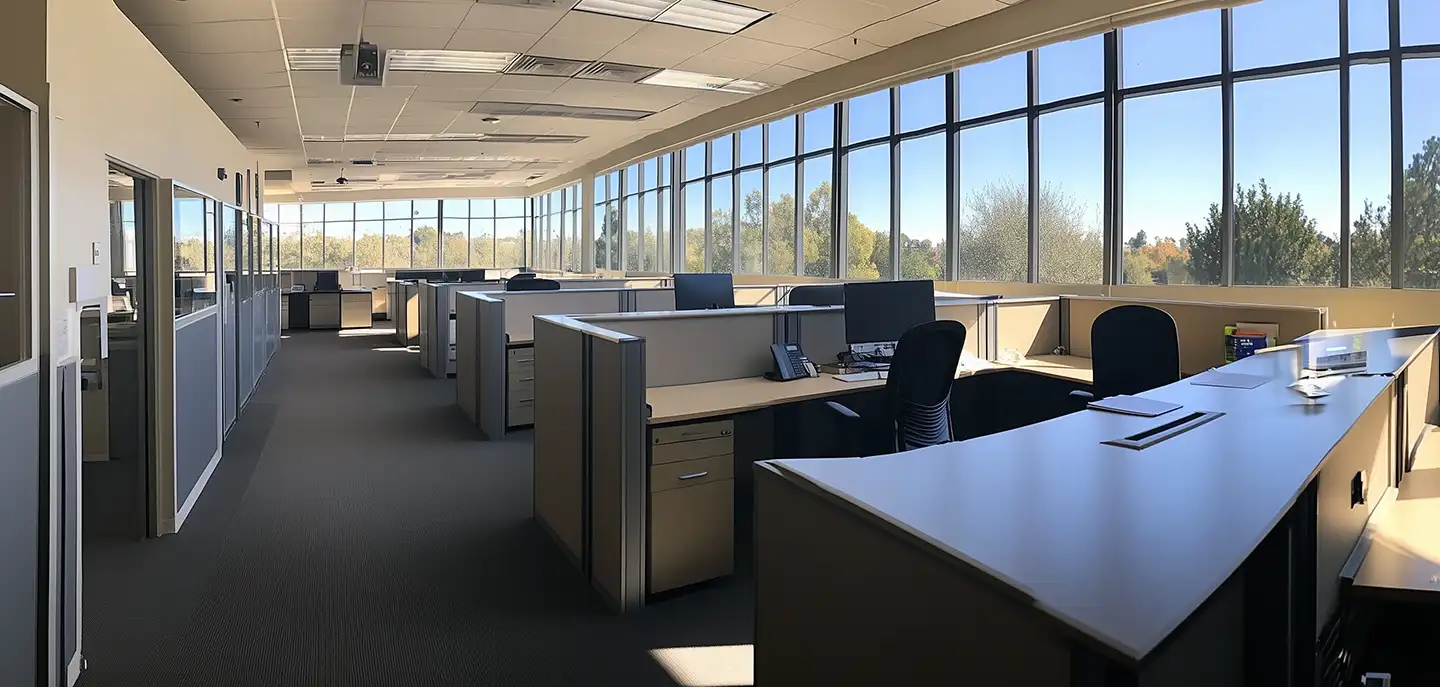

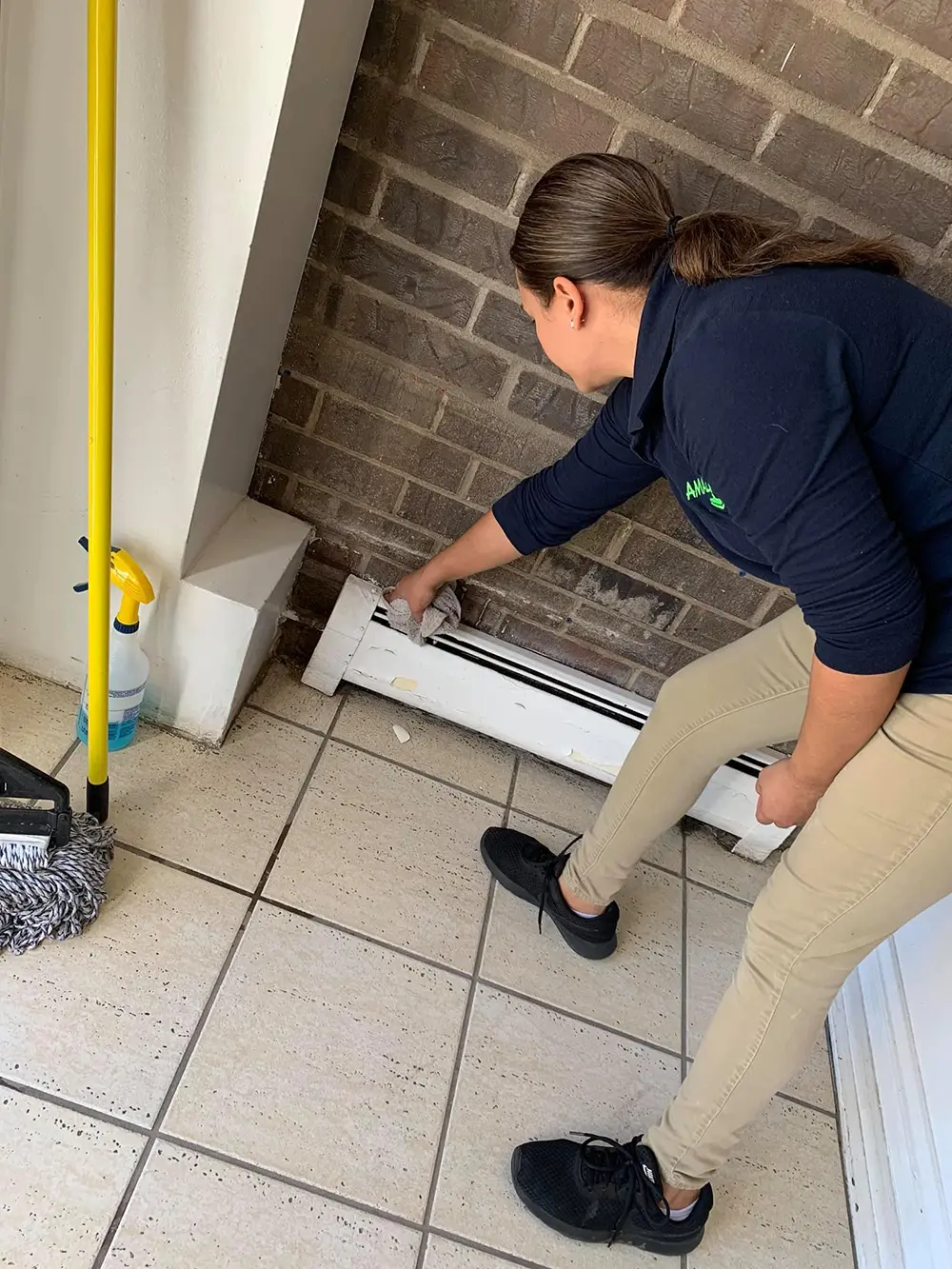


What's Included
Our Process
Peak Traffic Audit
We map your building's busiest hours by zone–lobby, restrooms, breakrooms, elevator banks–and build the porter's priority flow around real-world usage patterns, not guesswork.
Task Scope & Checklist
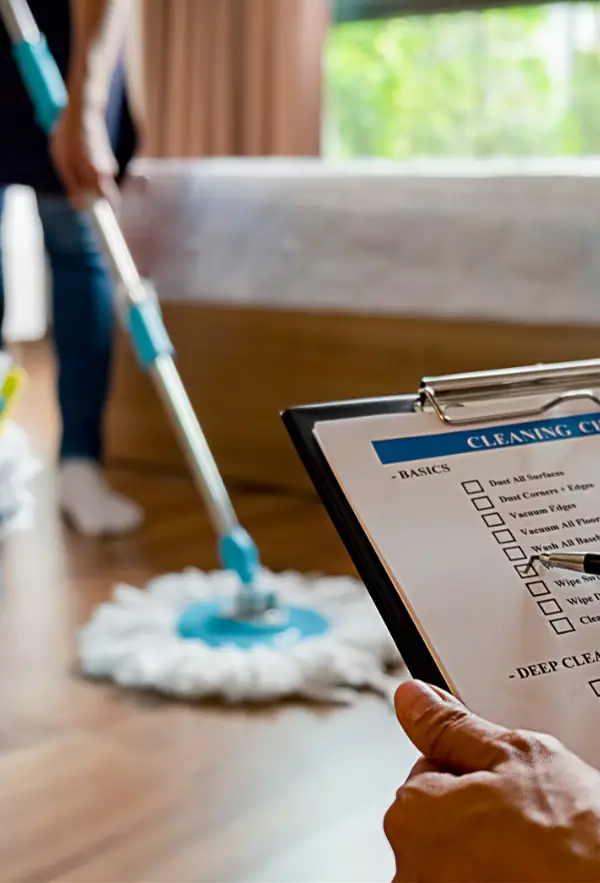
A customized mid-day task list covers your specific touchpoints, frequencies, and escalation protocols. Restroom check intervals, lobby polish passes, and spill response procedures are all defined upfront.
Porter Placement & Onboarding
We match a porter to your building's environment–professional presentation for corporate lobbies, bilingual capability where needed, familiarity with your tenant profile. Onboarding covers your building's access, tenant expectations, and preferred communication style.
Ongoing Communication & Review
Your porter is in direct contact with your facility manager throughout the day. Monthly reviews ensure the scope evolves with your building's needs–tenant changes, seasonal adjustments, event-driven coverage.
Seasonal Note
Winter (Nov–Mar) is the highest-risk period for NW suburb buildings without day porter coverage. Wet floor hazards from tracked moisture and salt appear within minutes of each weather event. Day porters manage this in real time–nightly crews cannot.
Facilities We Serve
Service Questions
Commonly asked questions about our day porter services systems.
- If your building has more than moderate foot traffic, yes. A nightly crew resets your building to baseline at midnight. A day porter maintains that baseline through 8 hours of real-world use. Without mid-day coverage: restrooms run out of soap or paper mid-morning, lobby glass accumulates fingerprints by 10 AM, spills sit unattended in breakrooms for hours, and wet lobby floors from rain or snow create slip hazards for hours before anyone addresses them. The nightly crew and day porter serve different functions–neither replaces the other.
- The schedule varies by building, but a typical corporate building day porter might look like this: 8–9 AM: initial lobby polish, glass wipe, mat check, restroom first pass. 9–10 AM: common area trash pull, breakroom wipe-down, elevator bank check. 10–11 AM: restroom second pass (restocking check), lobby glass re-wipe if needed. 11 AM–1 PM: lunch traffic management–breakroom monitoring, spill response on standby, lobby mat check. 1–2 PM: post-lunch common area reset, full restroom pass. 2–4 PM: afternoon high-touch surface wipe-down, restroom third pass, conference room resets for end-of-day meetings. 4–5 PM: end-of-day lobby and entrance polish, mat and trash final pass. This is customized to your building's actual traffic rhythm during onboarding.
- Day porters in multi-tenant environments are facility ambassadors as much as cleaners. They're trained to interact with tenants and guests professionally and courteously–holding doors, directing visitors, responding to tenant requests within their scope, and escalating anything beyond their scope to your facility manager immediately. They wear professional branded uniforms and carry themselves with the composure you'd expect from any front-of-house professional. Tenants frequently comment positively on day porter presence in satisfaction surveys–a visible, responsive building staff signal that management cares.
- It depends on your building's traffic pattern. Full-day (8 hours, typically 8 AM–4 PM or 9 AM–5 PM) is standard for corporate office buildings and medical facilities with steady traffic throughout. Half-day (4 hours) works for smaller buildings with concentrated traffic windows–morning rush and lunch. Peak-only coverage (2–3 hours around lunch or specific high-traffic events) is available but less common. We recommend starting with full-day and adjusting based on 30-day observation. Many buildings that started with half-day coverage converted to full-day once they saw the difference.
- Winter is when day porter value is clearest. Every time it rains, snows, or parking lot salt begins to melt, tracked moisture appears in your entry points within minutes. Without real-time monitoring, wet lobby floors sit hazardous for hours–creating slip-and-fall liability throughout your building's busiest period. A day porter: monitors entry points continuously during weather events, deploys wet floor signage immediately when moisture appears, swaps saturated lobby mats before they stop absorbing, applies salt neutralization to prevent brine spread deeper into the building, and escalates to facility management if conditions exceed standard response. A single slip-and-fall settlement costs $10,000–$50,000+. Full-day day porter service for a month costs a fraction of that.
- Yes–this is a high-value function for corporate campuses and multi-tenant office buildings. Between back-to-back meetings, a day porter resets the conference room: clears dishes and trash, wipes the table and chairs, restocks water if applicable, and closes out the previous meeting's setup so the next group walks into a presentation-ready room. For building events (tenant appreciation days, lobby activations, holiday gatherings), porters provide setup support, during-event maintenance, and post-event clean-down. This takes significant burden off your admin and facility management team.
Ready for a Spotless Workspace?
Get a free, no-obligation quote for your NW suburb facility. We respond within 24 hours.
Or call us at (847) 222-3536