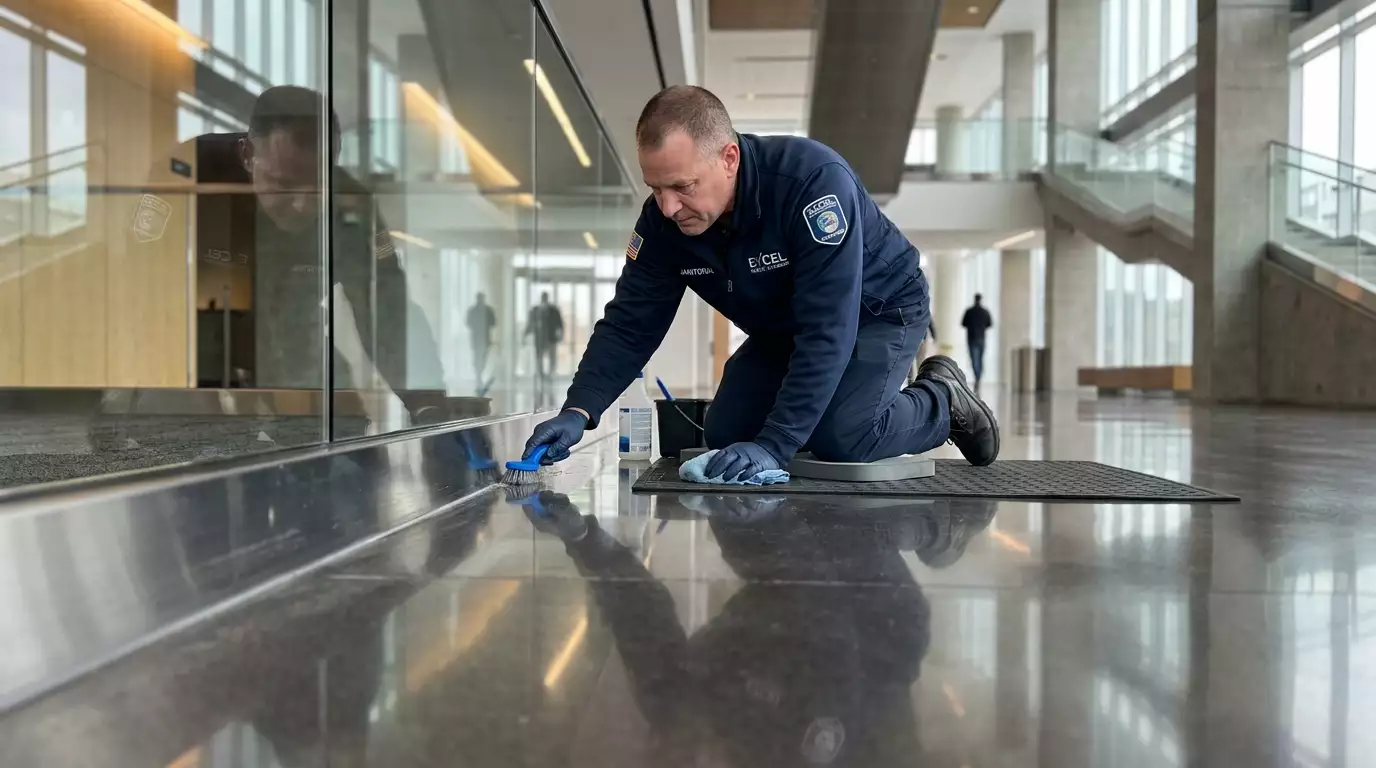
Commercial Floor Care That Protects Your Investment
Dedicated floor care programs for VCT, carpet, tile, and concrete–maintenance schedules that extend floor life and eliminate slip-and-fall liability.
Your Floors Are a Capital Investment. Most Facilities Treat Them Like Consumables.
The Hidden Cost of Deferred Floor Maintenance
Look at the lobby floor you installed five years ago. The VCT that gleamed on opening day. The carpet that looked professional in the design spec. Now look at it honestly.
The high-traffic lane has a dull, worn path ground into the finish. The corners are yellowed from built-up wax layers that buffing no longer fixes. The grout lines in the restroom tile are so dark you’re not sure anyone remembers what color they were supposed to be. The conference room carpet smells faintly of every spill from the past two years.
What you’re seeing isn’t age. It’s deferred maintenance–and most of it is reversible.
Commercial flooring in the Northwest Suburbs is a significant capital investment. A 10,000 sq ft VCT floor costs $40,000–$80,000 to install. Commercial carpet replacement runs $15,000–$50,000+ depending on area and spec. Tile restoration or replacement is $20,000–$60,000 for a mid-size facility. These are budget line items that facility managers and property owners are trying to defer as long as possible.
Proper floor care maintenance extends that lifecycle by years. Deferred maintenance accelerates deterioration to the point where replacement is forced before the floor’s designed lifespan.
What’s Actually Damaging Your Floors (And What Standard Cleaning Misses)
Standard janitorial mopping is maintenance–not floor care. It removes surface debris but does nothing about the underlying damage mechanisms.
Salt and road brine (Nov–Apr): The primary floor killer in the NW suburbs. Road brine applied to parking lots is corrosive. When it tracks into your facility, it doesn’t evaporate–it stays on the floor surface until properly neutralized. Standard mops spread it. Salt brine etches VCT finish, penetrates grout joints, and embeds in carpet pile where it cuts fibers with every footstep. By April, facilities without proactive winter floor protocols have significant damage that requires expensive restoration.
Wax buildup on VCT: Each wax coat adds a thin layer. Without periodic stripping, those layers accumulate into a yellowed, hazy buildup that light can’t penetrate cleanly. Buffing polishes the buildup–it doesn’t remove it. The floor looks progressively worse despite regular maintenance. Once buildup is severe, you’re stripping through 8–12 layers of old wax, which takes significantly longer and costs more than regular annual maintenance would have.
Embedded particulate in carpet: Vacuuming removes surface debris. It doesn’t reach what’s embedded in the carpet pile–salt crystals, biological particulate, grit from shoes, and absorbed spills from years of occupancy. That embedded material acts like sandpaper: every footstep grinds it against the carpet fiber, slowly cutting and crushing the pile. By the time a carpet “looks dirty,” it’s been structurally degrading for months.
Unsealed grout: Tile grout is porous. Without a professional sealer, it absorbs everything: cleaning chemicals, spills, mop water, and biological matter from restrooms. Once embedded, standard mopping can’t remove it. The grout lines darken permanently–until high-pressure extraction removes the contamination and fresh sealer prevents future penetration.
The Liability Problem: Floor Safety and Slip-and-Fall Risk
Beyond appearance and investment, floor condition is a direct liability issue.
A floor with deteriorated finish–worn through in high-traffic areas–loses its slip resistance. In winter, when boots track moisture into entryways, a floor without proper slip-resistant finish becomes a slip-and-fall risk. A single incident costs $10,000–$50,000+ in medical, legal, and insurance costs. For a multi-tenant building, that liability extends to every tenant’s customers and employees.
We use UL-classified slip-resistant floor finishes on all VCT applications. These meet OSHA and ADA slip-resistance standards while providing the professional high-gloss appearance commercial facilities expect. Safety and aesthetics aren’t competing priorities–the right finish delivers both.
Commercial Floor Services: What Each One Does and When You Need It
| Service | What It Does | Frequency | Best For |
|---|---|---|---|
| High-Speed Buffing/Burnishing | Polishes wax finish to mirror-like gloss; removes light scuffs | Monthly (high-traffic); quarterly (low-traffic) | VCT in retail, medical hallways, corporate lobbies |
| Strip & Wax | Removes all wax buildup down to substrate; applies fresh finish coats | 1–2x per year | Any waxed floor with yellowing, haziness, or visible buildup |
| Hot-Water Carpet Extraction | Deep cleans carpet pile; removes embedded salt, bio-matter, stains | Quarterly (high-traffic); 2x/year (low-traffic) | All commercial carpet; essential after every winter season |
| Tile & Grout Deep Clean + Seal | High-pressure extraction of grout lines; professional sealer application | Annual or as needed | Restrooms, kitchens, entryways with tile |
| Concrete Cleaning & Sealing | Removes embedded staining; protective sealant application | Annual; seasonal for winter salt exposure | Warehouses, parking garages, retail back-of-house |
| Salt Neutralization Treatment | Chemically neutralizes road brine before it damages finishes | Monthly (Nov–Apr) | Any facility with high winter foot traffic from parking lots |
Maintenance Schedules by Facility Type
Different facilities wear floors differently. Here’s what we typically recommend:
High-Traffic Retail (5,000–20,000 sq ft):
- VCT: Monthly burnishing + annual strip-and-wax
- Carpet: Quarterly extraction + spot treatment as needed
- Entryway tile: Monthly grout cleaning; annual sealing
- Winter: Monthly salt neutralization Nov–Apr
Corporate Office (2,000–10,000 sq ft):
- VCT or LVP: Monthly buffing + annual strip-and-wax for VCT
- Carpet (conference rooms, common areas): Semi-annual extraction
- Winter: Salt neutralization for lobbies and entryways Nov–Apr
Medical Facility (Any Size):
- VCT hallways: Monthly buffing; semi-annual strip-and-wax (high compliance standard)
- Restroom tile: Monthly deep clean + annual grout sealing
- Winter: Monthly salt treatment on all entry zones
School or Educational Facility:
- VCT hallways and cafeteria: Monthly burnishing; annual strip-and-wax (summer)
- Gymnasium wood floors: Semi-annual screening and recoating
- Winter: Enhanced salt treatment protocols during school entry/dismissal peaks
Winter Floor Protection: The Most Ignored Maintenance Window
October through April is when NW suburb commercial floors take the most damage–and when the fewest facilities have proactive protocols in place.
Here’s what happens without intervention:
- November: First road brine applications coat parking lots. Foot traffic begins tracking salt into lobbies and entryways.
- December–February: Salt accumulation peaks. Brine penetrates floor finishes and grout. Carpet fibers begin degrading from embedded crystals.
- March–April: Brine concentration drops but damage is done. VCT finish shows etching and haze. Carpets have embedded salt residue throughout the pile.
- Spring: Facility managers see the damage clearly for the first time. Strip-and-wax is now required. Carpet extraction is urgent. Grout restoration is needed.
The right approach: start in October, before the first salt application.
Our winter floor protection program includes:
- Salt neutralization treatments applied monthly November through April
- Enhanced mat protocols coordinated with your janitorial team to capture debris before it reaches floors
- Mid-season assessment in January to evaluate damage accumulation and adjust treatment intensity
- Spring restoration planning in March so the first warm weekend is already scheduled for carpet extraction and VCT strip-and-wax
Facilities that run proactive winter floor programs spend less on spring restoration and extend floor replacement timelines by 2–3 years.
Getting Started: Floor Assessment and Maintenance Plan
Most facilities benefit from a floor assessment before committing to a maintenance program. Here’s the process:
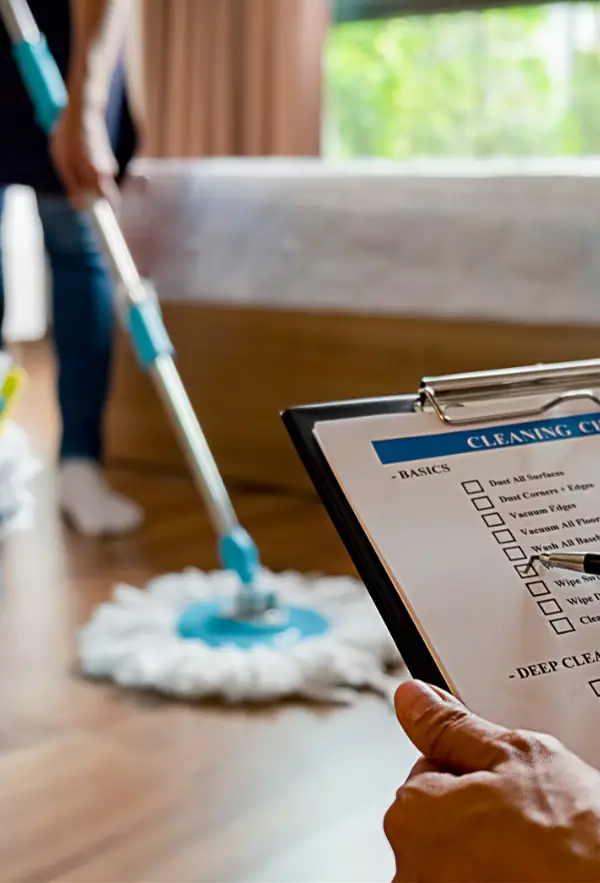
- Floor audit (1–2 hours): We walk every floor surface, assess current condition, identify damage from previous maintenance gaps, and document what each zone needs.
- Maintenance plan proposal (within 24 hours): A zone-by-zone schedule with service types, frequencies, and pricing. No surprises.
- Restoration work first (if needed): If floors need a deep reset before a maintenance program makes sense, we schedule that first–often a weekend strip-and-wax or full carpet extraction.
- Ongoing scheduled maintenance: Added to your building’s maintenance calendar. We flag upcoming service windows and confirm scheduling. You don’t have to track it.
Spring is restoration season. After every NW suburb winter, commercial floors need extraction, strip-and-wax, and grout treatment to undo the season’s salt damage. April and May fill fast–if your floors took a hit this winter, book your spring restoration now before the schedule closes.
Your floors are a capital investment. Protect them like one.
Contact Amazing Cleaning Janitorial for a free commercial floor assessment and multi-year maintenance plan.


What's Included
Our Process
Floor Material & Condition Audit
We assess every floor surface type in your facility–VCT, carpet, tile, concrete, hardwood–and evaluate current condition, wear patterns, and built-up damage from previous maintenance.
Custom Maintenance Schedule
A floor-by-floor plan is built with the right service type and frequency for each surface: monthly buffing for high-traffic VCT, quarterly extraction for carpet, annual strip-and-wax for restoration.
Restoration & Deep Service
Industrial-grade equipment handles what standard cleaning crews can't–hot-water extraction, multi-pass stripping, high-pressure grout cleaning, and commercial-grade sealant application.
Ongoing Protection Program
Scheduled maintenance keeps floors in peak condition year-round. We track your floor care calendar and proactively flag surfaces approaching wear thresholds before they become costly problems.
Seasonal Note
November through April is the most damaging season for NW suburb commercial floors. Salt neutralization treatments should begin in October before the first road brine application. Spring restoration (carpet extraction, strip-and-wax) is our busiest season–book early.
Facilities We Serve
Service Questions
Commonly asked questions about our floor care systems.
- The key indicator is wax buildup. Over time, layers of wax accumulate and create a yellowed, hazy appearance that buffing can no longer fix–it just polishes the discolored buildup. If your VCT looks dull or yellowed even right after buffing, it needs a full strip down to the substrate followed by fresh wax coats. We assess this during your floor audit. Most high-traffic commercial floors in the NW suburbs need a full strip-and-wax once or twice a year, with monthly buffing in between to maintain the finish.
- It depends on fiber condition and pile depth. If the carpet structure is intact (no fraying, no separation from backing, no structural damage), hot-water extraction can dramatically restore appearance–pulling years of embedded salt, bio-matter, and particulate that surface cleaning never reaches. If the pile is crushed and fibers are broken, cleaning improves hygiene but won't restore appearance. We assess this during your floor audit and give you an honest answer. Often facilities that were considering replacement find that a professional extraction buys 2–4 more years of useful life at a fraction of replacement cost.
- Salt and road brine are the primary culprits. When salt tracks in from parking lots, it sits on your floor surface until mopped. Standard janitorial mopping spreads the brine–it doesn't neutralize it. That brine is chemically corrosive to floor finishes: it etches VCT, penetrates grout lines, and embeds in carpet fibers where it acts like sandpaper with every footstep, cutting pile over time. By spring, facilities without proactive winter floor protocols have significant finish deterioration and carpet fiber damage. Salt neutralization treatments, applied starting in November, stop this damage before it happens.
- For most commercial facilities (3,000–10,000 sq ft), a full strip-and-wax takes 6–12 hours. We schedule this overnight or on weekends so the new wax can cure before foot traffic returns–typically 4–6 hours of cure time after application. For larger facilities or phased projects, we can section the work across multiple nights so you're never fully shut down. Your floor is completely usable by the time your team arrives the next morning.
- These are three different services for three different needs. **Buffing** (low-speed) cleans and restores a light shine to waxed hard floors–maintenance work done monthly or quarterly. **Burnishing** (high-speed) generates heat that brings out a deep, mirror-like gloss on waxed VCT–typically monthly for high-visibility retail and corporate lobbies. **Extraction** is for carpet: hot water is injected deep into the pile, agitated, and vacuumed out along with embedded dirt and contaminants. Most facilities need all three–just for different floor surfaces and zones. Your floor audit identifies which service applies where.
- Yes, and this is the most cost-effective approach. Floor care as a scheduled add-on to your existing cleaning contract means the crew already knows your building–no separate coordination, no access issues, and floor care is planned into your building's maintenance calendar automatically. We flag when surfaces are due, schedule the work during off-hours, and document everything. Many facilities start with janitorial service and add floor care quarterly once they see the difference proper maintenance makes.
Ready for a Spotless Workspace?
Get a free, no-obligation quote for your NW suburb facility. We respond within 24 hours.
Or call us at (847) 222-3536