Commercial Deep Cleaning: A Complete Facility Reset
Top-to-bottom sanitization that reaches what standard janitorial misses–vents, baseboards, behind equipment, interior cabinetry, and every surface that accumulates over time.
Your Facility Looks Clean. Here’s What’s Actually Accumulating Inside It.
What Standard Janitorial Doesn’t Reach
Your nightly crew does their job. Trash gets emptied. Floors get swept. Restrooms get sanitized. Every morning the office looks clean enough.
But look up.
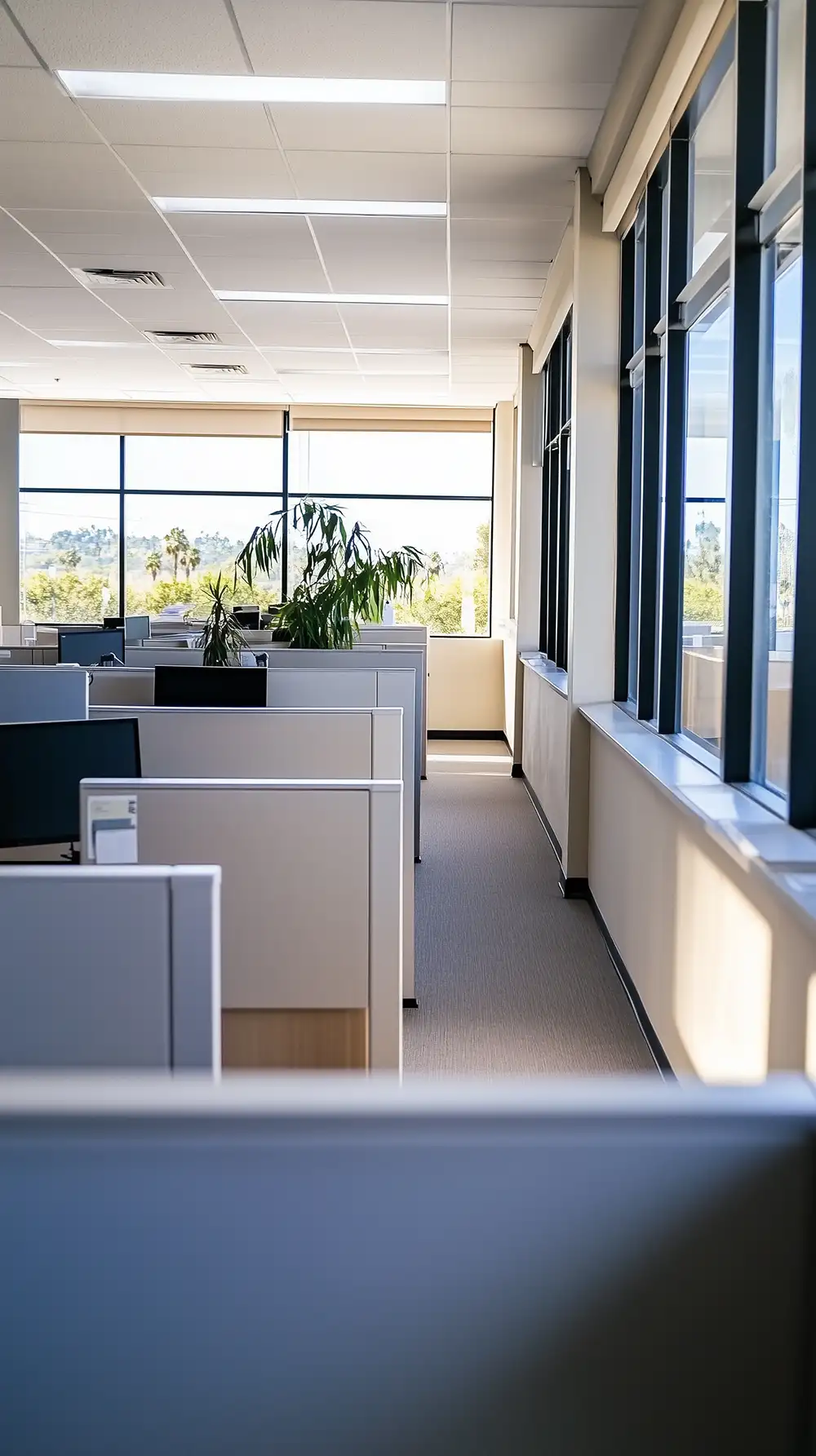
The HVAC diffuser above the breakroom – grey rings of compacted dust around every vent opening, recirculating into the air every time the system runs. The baseboard behind the copier room cabinets, untouched since the furniture was moved in. The underside of the conference table. The space behind the kitchen refrigerator where a slow drip has been cultivating moisture buildup since sometime last year. The blinds in the corner offices that haven’t been cleaned since installation – each slat a loaded dust filter releasing its contents into the room every time the AC kicks on.
That’s not visible dirt. That’s accumulated biology: dust mites, allergens, mold spores, bacteria, and years of particulate matter that daily maintenance was never designed to address.
Your employees are breathing it. And in a sealed NW suburb office building running HVAC from November through April, it’s been concentrating all winter.
Why Every Facility Needs a Periodic Deep Reset
Standard janitorial service is maintenance. It keeps visible surfaces clean between deep cleans. That’s its job, and it does it well.
But maintenance cleaning can’t reach what’s been accumulating for months:
- HVAC vents collect dust that gets pushed back into room air with every cycle
- Behind and under heavy furniture harbors years of debris, dust mats, and biological accumulation
- Blind slats and window treatments act as passive air filters – they fill up and release contamination
- Interior cabinetry, refrigerator coils, and under-sink areas accumulate grime that standard cleaning never touches
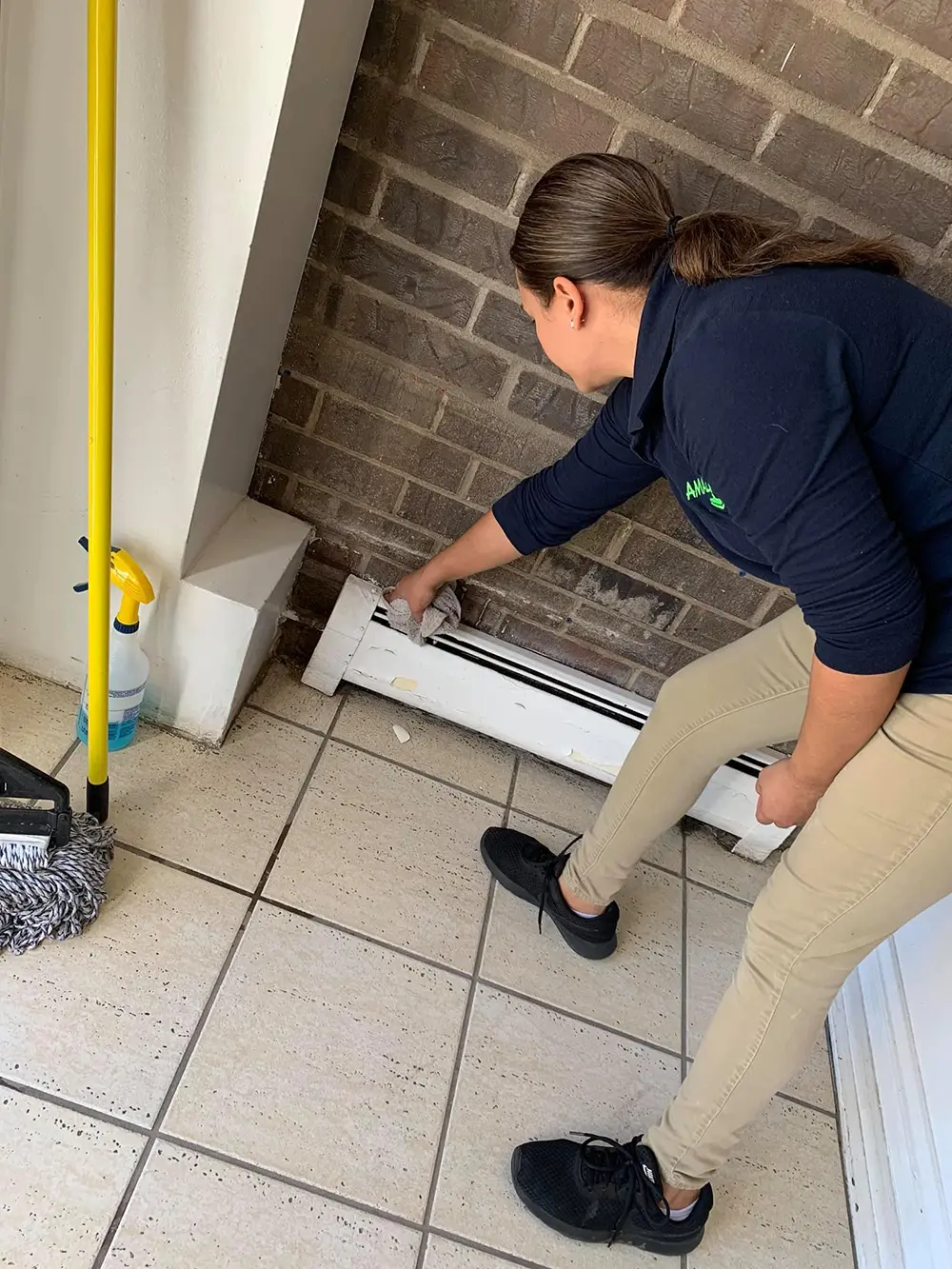
- Baseboards, door frames, and wall surfaces collect scuff marks and buildup that daily wiping can’t remove
Without a periodic deep clean, this accumulation compounds. Allergens concentrate. Air quality degrades quietly. Employees get sick more often than they should. The facility looks fine on the surface but tests poorly underneath.
A commercial deep clean is a facility reset – the periodic overhaul that brings every surface back to baseline so your maintenance program is actually maintaining a clean facility, not a degrading one.
Sick Building Syndrome: When Your Space Is Making People Ill
If your employees get sick more often than at other companies. If people have persistent allergy or sinus symptoms that improve on work-from-home days. If absenteeism spikes every winter without obvious explanation.
The building is likely a contributing factor.
Sick Building Syndrome (SBS) is a documented condition where poor indoor air quality causes occupant health complaints – headaches, fatigue, eye and throat irritation, respiratory symptoms – that improve on leaving the building. The primary drivers are accumulated biological contamination in HVAC systems, mold from moisture sources, and high concentrations of dust and allergens in sealed environments.
A deep clean that addresses HVAC diffusers, duct surfaces, moisture-prone areas, and all major dust accumulation zones dramatically reduces the biological load in your building’s air. Many facilities notice the difference within the first week after a deep clean – fewer complaints, better focus, reduced tissue and cold medication consumption in the breakroom.
What a Commercial Deep Clean Actually Covers
Most facility managers are surprised by the scope. Here’s what a top-to-bottom commercial deep clean addresses that daily janitorial doesn’t:
| Zone | What Gets Cleaned | Why It Matters |
|---|---|---|
| HVAC vents and diffusers | Dust buildup on and around vent openings; accessible duct surfaces | Dust recirculates through the building every HVAC cycle – it’s airborne contamination at scale |
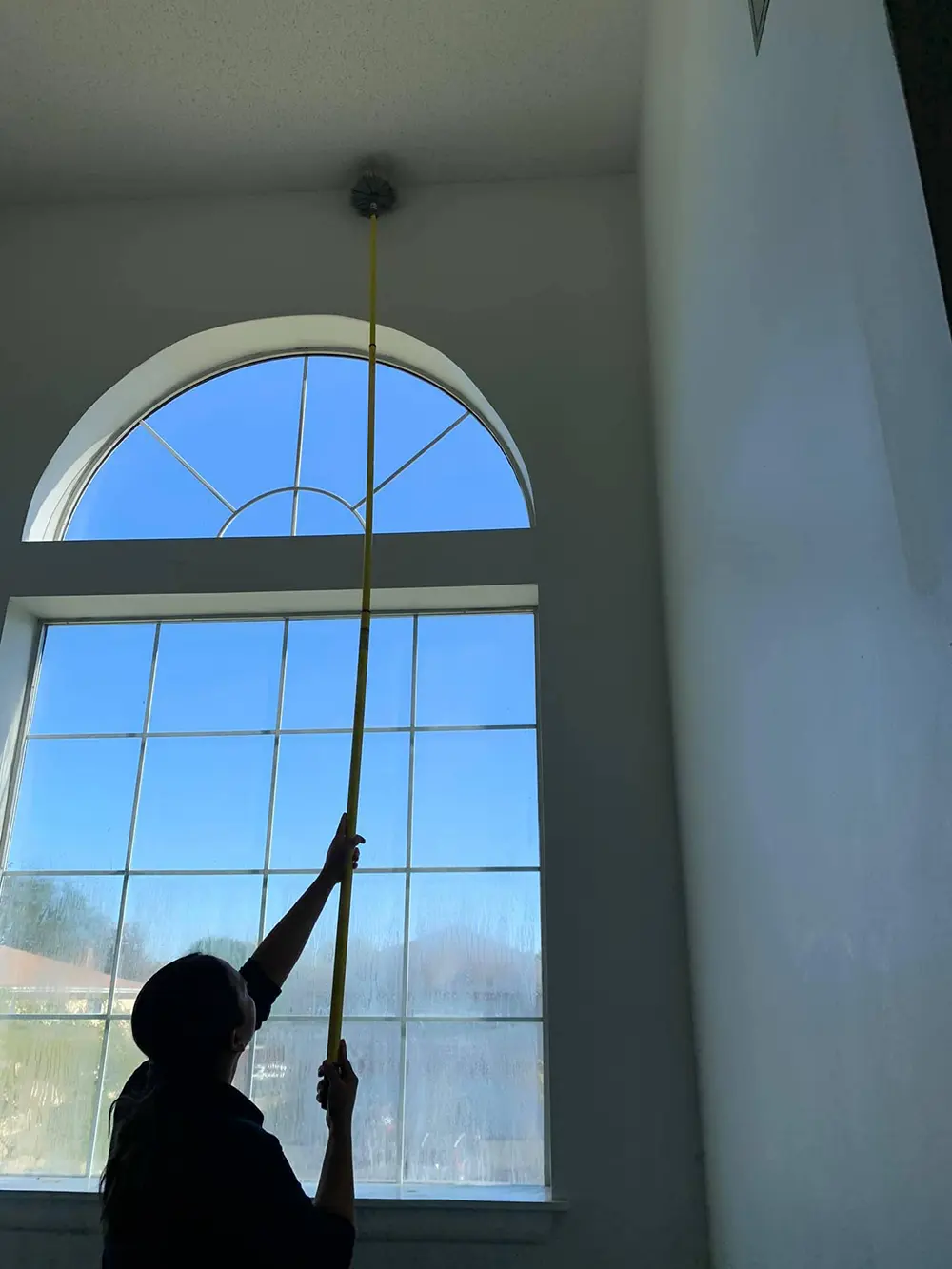
| High surfaces | Ceiling fans, light fixtures, tops of cabinets, overhead equipment | Gravity means these deposit dust on every surface below them continuously |
| Walls and baseboards | Scuff marks, buildup, baseboard grime, door frame accumulation | Invisible in daily service; visually obvious in bright light or to first-time visitors |
| Behind/under furniture | Under desks, behind heavy equipment, under file cabinets | These areas haven’t been cleaned since the furniture was installed in many facilities |
| Interior cabinetry | Cabinet interiors, drawers, shelf surfaces | Breakroom and kitchen cabinets accumulate crumbs, residue, and pests |
| Breakroom appliances | Refrigerator interior and coils, microwave interior, coffee machine area | Primary source of odor, bacteria, and mold in most office breakrooms |
| Under-sink areas | Cabinet base, pipe area, drain surroundings | Common mold and moisture accumulation zone that standard cleaning never reaches |
| Blinds and window treatments | Slat-by-slat or full treatment cleaning | Each slat is a loaded dust filter – cleaning them improves air quality immediately |
| High-touch surfaces (thorough) | Door handles, light switches, shared equipment – full disinfection pass | Daily disinfection is quick; deep clean is deliberate and complete |
When to Schedule a Commercial Deep Clean
Different triggers call for a deep clean. The most common:
Seasonal Resets (Most Common)
- Spring: Post-winter reset after months of sealed-building HVAC recirculation and salt accumulation. Most popular timing – April and May book fast.
- Fall: Pre-holiday reset before increased occupancy, holiday events, and peak illness season (Oct–Mar).
Event-Driven Deep Cleans
- New tenant move-in: Previous occupants left behind years of accumulation. New tenants deserve a clean baseline.
- Pre-inspection or audit: Regulatory inspection, corporate visit, or client tour – the deep clean ensures nothing embarrasses you.
- Post-illness outbreak: After confirmed flu, COVID, norovirus, or similar – a documented deep clean protects employees and demonstrates responsibility to your team.
- Pre-grand opening: Retail, restaurant, or service business preparing to open. Construction dust, debris, and contractor residue need a full removal pass.
- Post-renovation: Drywall dust, adhesive residue, paint overspray, and construction debris permeate everything – a post-construction deep clean is the final step before occupancy.
Recommended Frequency by Facility Type
| Facility Type | Recommended Deep Clean Frequency |
|---|---|
| Standard office (low-medium traffic) | 2x per year (spring + fall) |
| High-traffic office or coworking | Quarterly |
| Retail or commercial space | Quarterly |
| Medical or dental facility | Quarterly minimum; annually for lower-risk areas |
| School or daycare | Before each new term (3–4x per year) |
| Restaurant (non-kitchen) | Quarterly |
| Post-illness or outbreak | Immediately, on a one-time basis |
The HEPA Difference: Why Equipment Matters
A deep clean performed with standard cleaning equipment is counterproductive. Disturbing years of accumulated dust with a regular vacuum recirculates the particles into the air – undoing the point of the service.
Our deep cleaning teams use:
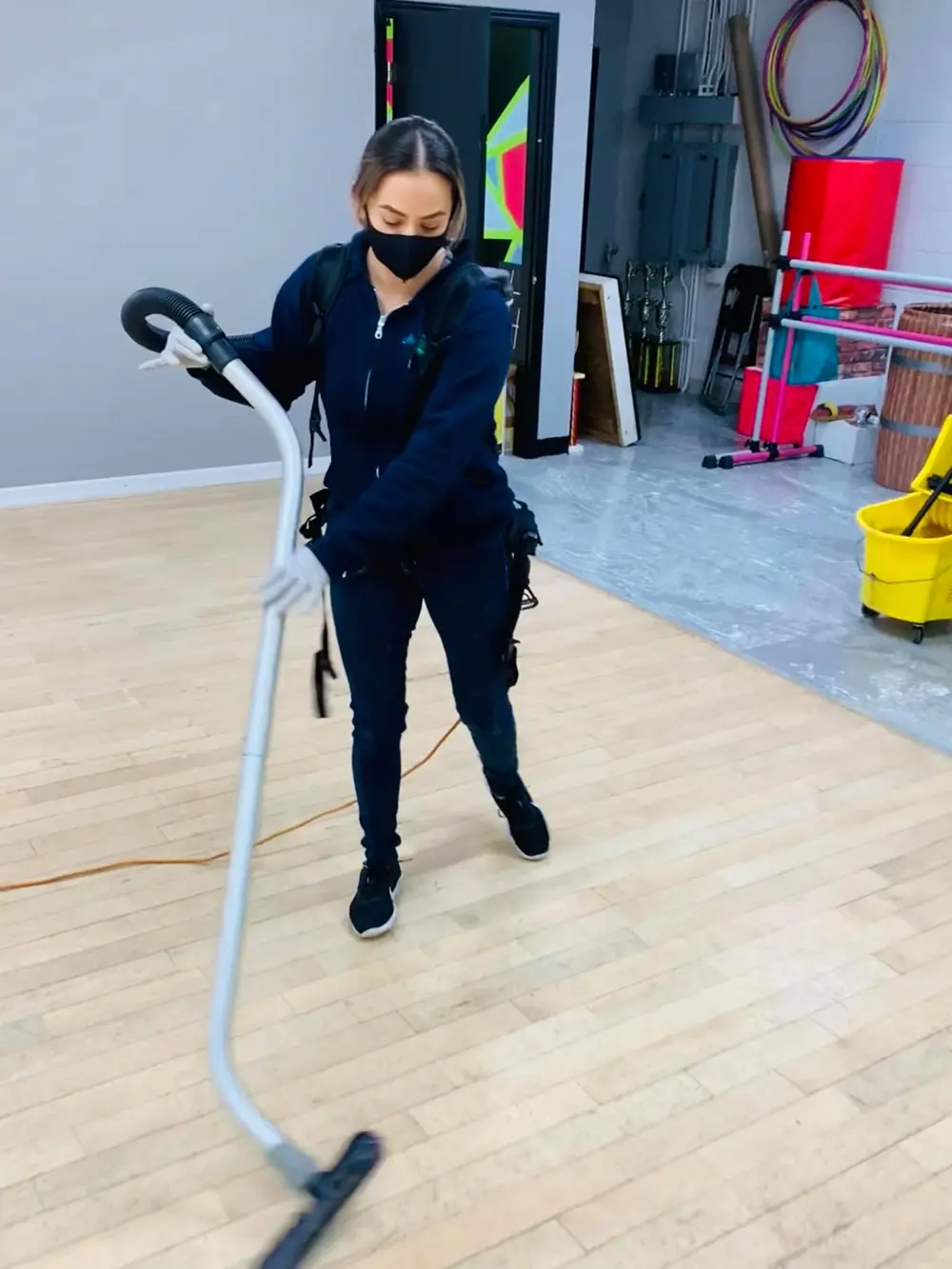
- Industrial HEPA-filtered vacuums that capture particles down to 0.3 microns – the size range for dust mites, mold spores, and fine particulate matter
- Air scrubbers that run throughout the deep clean, continuously filtering displaced airborne particles
- EPA-registered disinfectants at appropriate concentrations for the contamination level – stronger than daily cleaning products
- Microfiber systems that capture particles rather than spreading them across surfaces
The HEPA equipment isn’t an upgrade. It’s the minimum standard for a deep clean that actually improves air quality rather than temporarily rearranging the problem.
Scheduling Your Commercial Deep Clean
Spring and fall windows fill quickly. Here’s how to lock in your date:
- Audit request (30 minutes): We walk your facility, identify problem accumulation zones, assess scope, and give you an honest timeline and cost estimate.
- Date selection: Nights, weekends, and holiday periods are most common. We coordinate scheduling around your occupancy to ensure zero disruption.
- Crew deployment: Deep cleaning crews are separate from standard janitorial teams – trained specifically for intensive work with the right equipment for the job.
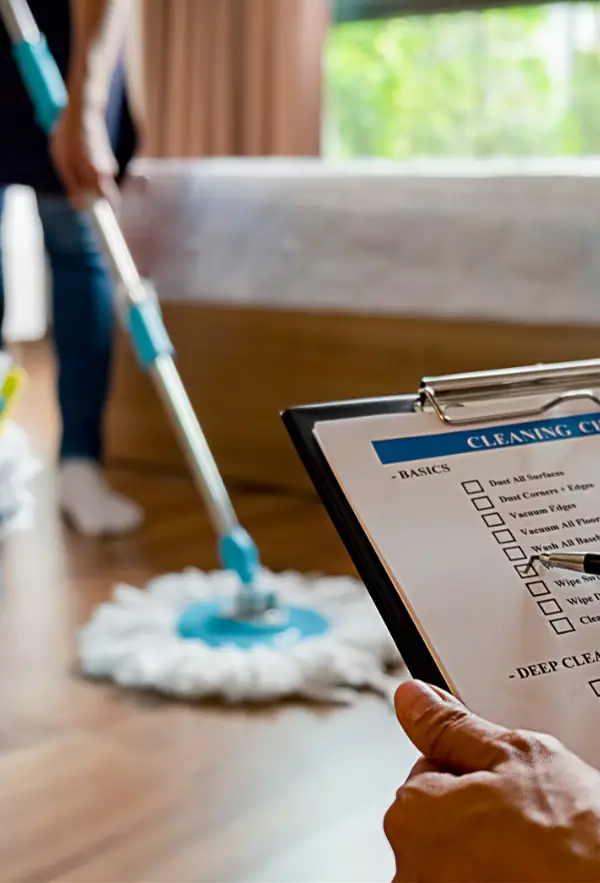
- Walk-through on completion: A supervisor walks the space with you before the crew leaves. Every zone is signed off. Any missed area is addressed immediately.
- Add to your maintenance calendar: If you want bi-annual or quarterly deep cleans going forward, we schedule them in advance and prompt you when each is approaching.
Spring booking opens in February. April and May are our highest-demand months for post-winter resets–facilities that book in winter secure their preferred weekend dates. If you’re planning a spring deep clean, don’t wait until March.
Stop maintaining a facility that hasn’t been reset since it was built.
Contact Amazing Cleaning Janitorial for a commercial deep clean audit and quote.
What's Included
Our Process
Room-by-Room Deep Clean Audit
We inspect every room and zone, documenting accumulated problem areas, biological buildup risk zones, and surfaces that standard cleaning has been missing. You know exactly what we're addressing before we start.
Top-Down Systematic Execution
Crews work ceiling to floor–HVAC vents first, then light fixtures, walls, furniture, and finally floors. Dust and debris fall down as we work, so nothing gets recleaned and nothing gets missed.
HEPA-Filtered Capture and Disinfection
Industrial HEPA-filtered vacuums and air scrubbers capture displaced dust rather than recirculating it. EPA-registered disinfectants at appropriate concentrations handle biological contamination throughout.
Supervised Final Walk-Through
A supervisor walks the completed space with you, zone by zone, to confirm every area meets the reset standard before we leave. Issues are addressed on the spot.
Seasonal Note
Spring deep cleans (April–May) are our busiest booking window–post-winter resets after sealed-building allergen season. Book 2–3 weeks in advance. Fall pre-holiday deep cleans fill quickly in October.
Facilities We Serve
Service Questions
Commonly asked questions about our deep cleaning systems.
- Standard janitorial maintains visible surfaces: floors, trash, restrooms, desks. Deep cleaning targets the accumulation zones that daily service can't reach on a regular schedule: HVAC diffusers and return vents, tops of cabinets and light fixtures, baseboards and door frames, the space behind and under heavy furniture and equipment, interior cabinetry and appliance interiors, window blinds and treatments, wall surfaces with buildup, and under-sink areas. Think of janitorial as weekly oil changes–deep cleaning is the periodic engine overhaul that resets everything back to baseline.
- In facilities without regular deep cleaning, we typically find: heavy dust accumulation in HVAC vents and returns (which recirculates allergens through the building every time the system runs), visible grease or residue buildup in breakroom and kitchen areas, mold or moisture accumulation in under-sink cabinets or behind refrigerators, significant dust on blinds and window treatments, scuff and buildup on baseboards and door frames throughout, and contamination behind and under furniture that has never been moved. None of this is unusual–it's what happens when maintenance cleaning fills the role that periodic deep cleaning is supposed to. After the first deep clean, ongoing deep cleans take significantly less time because the baseline is reset.
- It depends on occupancy, traffic, and facility type. For most offices in the NW suburbs: twice a year–spring (post-winter, when sealed buildings have concentrated allergens all season) and fall (pre-holiday, before increased occupancy and illness season). High-traffic retail: quarterly. Medical facilities: quarterly minimum; annually at a minimum for lower-risk areas. Schools and daycares: before each new term and mid-year. Facilities that have gone years without a deep clean should plan their first as a multi-day restoration project, then settle into a regular schedule.
- Post-illness, you need both–and in the right order. Standard disinfection of high-touch surfaces addresses the immediate transmission risk. A deep clean goes further: sanitizing the HVAC system components and vents where pathogens can linger, disinfecting under-desk areas and chair undersides, treating breakroom and restroom areas thoroughly, and addressing any surfaces that were used during the illness period but aren't in standard daily cleaning rotation. After a confirmed illness outbreak, a documented deep clean also demonstrates to your employees and tenants that you took their health seriously–which matters for morale and confidence.
- For a 2,000–5,000 sq ft office, plan 6–10 hours. Larger facilities (5,000–15,000 sq ft) typically take 10–16 hours. We almost always schedule deep cleans overnight, on weekends, or during holiday breaks when the facility is unoccupied–the work is intensive and disruptive to occupants. HEPA air scrubbers run during and after the clean to capture displaced particulate before occupants return. For phased facilities (multi-floor or multi-tenant buildings), we can section the work across multiple nights. Your team arrives to a fully reset facility with no overlap.
- It works both ways. Existing janitorial clients get priority scheduling for deep cleans and can add them to their annual maintenance calendar–we track the timing and prompt you when the next one is due. One-time deep cleans are also available with no ongoing commitment: useful for new tenants taking over a space, facilities preparing for inspection, or businesses resetting after a specific event. Many clients start with a one-time deep clean to establish a baseline, then add it as a bi-annual addition to their janitorial program.
Ready for a Spotless Workspace?
Get a free, no-obligation quote for your NW suburb facility. We respond within 24 hours.
Or call us at (847) 222-3536